Health inequalities
In North Central London we have a very diverse population. For example, three out of our five boroughs – Islington, Haringey and Enfield – rank among the 20% most deprived local authority areas in the country. In addition one in four people in North Central London do not have English as their main language. The largest Black and minority ethnic communities are Turkish, Irish, Polish and Asian (Indian and Bangladeshi).

We know that access to cancer services and screening can vary significantly across our population, and that life expectancy and outcomes vary for different groups.
North Central London Cancer Alliance strives to reduce health inequalities for all people living in our area, so every one of our two million residents can access the same cancer services and achieve the same patient outcomes, whatever their identity, background or circumstances.
Our strategy
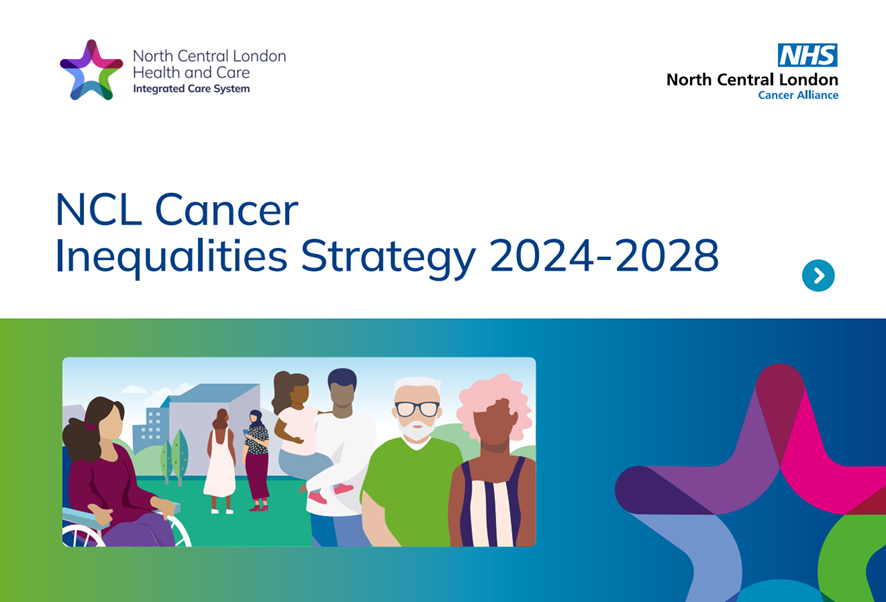
The Alliance’s reducing health inequalities programme brings together partners across the system to shape and deliver work which actively addresses disparities in cancer services. We have a clear Cancer Inequalities Strategy to guide the North Central London cancer system towards collective action to help address health inequalities.
The Strategy was developed together with local hospital trusts, the NCL Integrated Care Board (ICB), local authorities and organisations in the voluntary and charity sectors.
It sets out 10 key priorities in six main areas to help address inequalities in the North Central London cancer system between now and 2028.
1. Access
- Work with service leads to improve access to and design of hospital transport facilities, to help patients and carers attend all appointments.
- Improve access to and participation in clinical trials, particularly among people from ethnic minority groups, who are typically under-represented in research.
2. Communications
- Develop and implement a North Central London-wide approach to providing information to patients and carers in different formats and accessible language, to meet the diverse needs of our population.
- Pilot the use of technology during consultations, to allow patients and carers to access the information they require at any time to support their ongoing care needs.
3. Data and technology
- Apply a health inequalities lens to how we capture and analyse all data in cancer pathways, to help inform service development and improvement.
- Develop a cancer inequalities information dashboard that provides up to date data for use by all providers (primary, secondary and community care) to guide service delivery.
4. Workforce
- Invest in the development and continuous improvement of action-oriented training on addressing health inequalities for all clinical and non-clinical staff.
- Collate and promote resources about services in the community that primary and secondary care can refer patients to for additional support.
5. Trust and views of the healthcare system
- Strengthen partnership working with the voluntary, community and social enterprises sector across the whole cancer pathway to better target seldom-heard communities and health inclusion groups, to improve trust and encourage engagement with healthcare services.
6. Structure of the healthcare system
- Take an inclusive, user experience approach to quality improvement and service design to ensure barriers across the cancer pathway are considered and addressed.